
Common Driver Excuses in Pedestrian Accidents–and How to Disprove Them
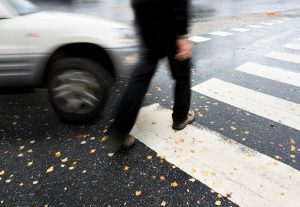 When a driver is involved in a pedestrian accident in Massachusetts, it doesn’t take long for the excuses to start coming. Even though drivers are required to use reasonable care (due care) and comply with Massachusetts right-of-way and speed/safety laws to avoid hitting pedestrians, many still feel a little too comfortable pointing the finger at the victims when they hit them.
That’s why it’s important to talk to a pedestrian accident lawyer as soon as possible after being hit by a car. You have significant legal protections in Massachusetts, and an attorney can help you fight for the compensation you deserve. Call the Law Offices of Gerald J. Noonan to discuss your legal options now.
Excuse 1: The pedestrian came out of nowhere
Every single police officer and pedestrian accident attorney has heard this claim from a driver before. Drivers argue that pedestrians popped out of nowhere, giving them no time to react. This is definitely possible, but in most cases, that just isn’t what happened. It is far more common that a driver is looking at their phone, driving too fast to stop safely, or otherwise driving recklessly. Drivers rely on this excuse because they know the law doesn’t require them to take unreasonable steps to prevent an accident, and if a pedestrian truly runs in front of them unexpectedly, they aren’t likely to be held liable. Your lawyer may use nearby surveillance footage, eyewitness testimony, and crash reconstruction expert testimony to push back against this excuse.
Excuse 2: They weren’t in a crosswalk
In Massachusetts, pedestrians may cross outside crosswalks, but they generally must yield to vehicles when doing so. Unfortunately, this means some drivers think that they don’t have to stop if a pedestrian isn’t in a crosswalk. This isn’t true. Drivers have to take reasonable steps to avoid accidents even when a pedestrian is crossing illegally. This is “exercising due care,” and drivers don’t get to opt out of it just because a pedestrian is crossing somewhere they don’t want them to.
Your attorney may help you get around this excuse by showing that the driver had clear visibility in the area you crossed, accident reconstruction testimony, and testimony from eyewitnesses indicating that you crossed safely and while giving the driver plenty of space.
Excuse 3: The pedestrian was wearing dark clothing
This excuse is often used in accidents occurring late at night or early in the morning. Products exist that allow pedestrians and bicyclists to make themselves more visible, but the existence of these products doesn’t legally obligate a pedestrian to use them. They are simply a precaution that pedestrians can choose to use if they want. A pedestrian not using them doesn’t mean a driver is automatically off the hook for hitting them.
Under state law and the definition of reasonable care, drivers are expected to adjust their driving to account for weather, lighting, and traffic conditions. Drivers must travel at a speed that is reasonable and proper for the conditions and visibility, and slow down as required to avoid endangering pedestrians. Evidence indicating that the driver was speeding, not using their headlights, or distracted can all work in your favor here. You may even have proof that you were wearing clothes that should have been visible to the driver—this is why you may want to hang onto your clothes from the accident until you’ve met with a lawyer. Hold off on washing or repairing them until you know whether or not they can serve as evidence.
Excuse 4: I had the right of way
This is similar to the “they weren’t in a crosswalk” line of thinking. Drivers may have the right of way in various situations—they had a green light, the pedestrian crossed on a “don’t walk signal,” or the pedestrian crossed in their path when they had a left arrow.
None of these situations exempts a driver from taking reasonable steps to avoid hitting a pedestrian. The pedestrian may be cited for failing to yield the right-of-way, but that doesn’t necessarily mean the driver isn’t at fault for the accident.
Excuse 5: They were distracted
Drivers are quick to claim that pedestrians were on their phones or listening to music and not paying attention to traffic. While distraction can absolutely play a role when comparative negligence is on the table, evidence often shows that it’s actually the driver’s distraction that caused an accident. Your lawyer may be able to pull phone records showing that the driver was on their phone at the time of an accident, and eyewitnesses may be willing to back that up. Video evidence from nearby businesses or home doorbell cameras may show that the driver did not even attempt to slow down before hitting the pedestrian, which may indicate that their attention was elsewhere.
Excuse 6: There was nothing I could do
When nothing else works, a driver may pull out this excuse. They often think that saying an accident was unavoidable absolves them of liability and puts the onus on the pedestrian to cover their own losses. They may point the finger at the flow of traffic, weather conditions, or a pedestrian’s sudden appearance. However, very few accidents are truly unavoidable. When your attorney gets hold of the evidence, they can often determine that the actual cause of the accident was the driver’s failure to adjust to road or weather conditions, the driver’s failure to pay attention to the road, or the driver’s choice to drive recklessly. Even if road, weather, and traffic conditions aren’t ideal, drivers are legally obligated to adjust their driving to account for those conditions.
Fight for fair compensation with the Law Offices of Gerald J. Noonan
At the Law Offices of Gerald J. Noonan, we are passionate about helping accident victims pursue fair compensation. Give us a call today or reach out online to set up a consultation right away.