
The Role of Vehicle Black Box Data in Car Accident Investigations
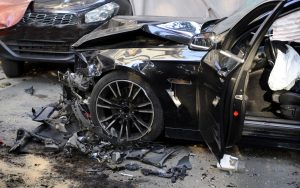 Black boxes aren’t confined to airplanes and trucks anymore. Many modern cars now have event data recorders (EDRs), also known as black boxes. EDRs capture information about the operation of a vehicle before, during, and after an accident. Our Brockton car accident lawyers can use the data from EDRs to help show how your accident happened, who is responsible, and why they are responsible.
What is an EDR?
According to the National Highway Traffic Safety Administration (NHTSA), an EDR refers to a device installed in a motor vehicle that records information for a brief period of time (seconds, not minutes) before, during, and after a crash.
According to Envista Forensics, “car black boxes are embedded systems connected to various sensors throughout a vehicle.” These sensors monitor vehicle systems and store limited data when a crash-related triggering event occurs.
Generally, the EDR is inactive until specific triggers occur, such as deceleration or a collision. When activated, the black box generally captures and stores data for a few seconds after the triggering event.
EDR modules are designed to withstand significant crash forces, but their survivability depends on the vehicle design and the severity and location of the impact.
EDRs, according to the NHTSA, do not provide a video or audio record of an accident. EDRs do not provide the hours of service of a driver (compared to electronic logging devices that do record a driver’s hours of operation).
New black boxes, with the rise of autonomous and semi-autonomous vehicles, are being designed to capture even more nuanced data points, including the actions of AI driving systems. “This development raises new questions about data handling and privacy, as well as the role of machine learning in interpreting crash scenarios.”
What data do car black boxes capture?
The types of data may vary depending on the car manufacturer and model. Some of the critical data that our car accident lawyers review, with the help of experts, includes the following:
- The speed and acceleration (a rapid increase or decrease) of the vehicle immediately before the accident. This information can help show if a driver was speeding, driving too closely, or trying to avoid the accident.
- Braking data. This information can reveal if the brakes were applied and how hard the brakes were applied, which can help show if a driver was distracted or failed to respond to traffic conditions properly.
- Steering and changes in direction. Some EDR systems may record steering input or stability data, depending on the vehicle’s make and model. This information can reveal whether the driver tried to swerve, make a sudden turn, or maintain control in the moments leading up to impact. This data is very useful in multi-vehicle accidents.
- Seatbelt use. The EDR can show which occupants were wearing their seatbelts.
- Airbag deployment. The black box data show if any airbags deployed and the precise moment when the vehicle’s internal safety systems responded to the impact. A failure to deploy may indicate that the airbag was defective.
- Engine RPM (revolutions per minute) and throttle position. This information can help show how well (or poorly) the driver was controlling their vehicle and how they responded to an emergency.
- Yaw rate and lateral accelaration data. This data is often useful in high-speed accidents or in rollover accidents.
- Yaw rate measures the vehicle’s rotation around its vertical axis, indicating if the car spun or drifted due to sudden steering inputs.
- Lateral acceleration data can show if a vehicle was under excessive sideways force, potentially due to sharp turns or unstable road conditions.
- Automatic collision notifications. Activation of an automatic collision notification (ACN) system after an accident.
What does the black box data show?
Our car accident lawyers use the black box data in the following ways:
- To show the path of the vehicles immediately before, during, and after the accident.
- To show step-by-step how the accident happened.
- To question or contradict the statements of another driver or witness about how the accident happened.
- To determine if your vehicle had a defective part that may justify filing a product liability claim against a manufacturer.
- To support your version of events, we can negotiate with insurance companies or argue your case before a judge and jury.
The traffic reconstruction experts we can work with may also use the EDR data in combination with video, photos, police reports, any crash accident forms, witness statements, and other evidence.
Most modern vehicles have black boxes, though some older vehicles may not.
How do our Brockton car accident lawyers access black box data?
Our lawyers work with technicians who can access and interpret EDR data. Technicians access the data by connecting to the car’s onboard diagnostic port and/or other hardware, and by using software to interpret it. We can access black box data from your car through you. The ability to access the data varies by the type and model of vehicle.
We may also use the Massachusetts court system to access black box data from other vehicles. This involves requesting access to the other driver’s data from their insurance carrier or their lawyer. We can issue a subpoena or make a formal demand through the discovery process.
EDR data generally belongs to the vehicle owner or lessee, and retrieval from another vehicle typically requires the owner/lessee’s consent or a court order (often obtained through discovery).
How long do car black boxes store data?
Generally, a car’s black box records data for just a few seconds. The data can be overwritten, such as if the driver repairs their car and gets into another accident. For this reason, it’s important to speak to our car accident lawyers quickly, so we can preserve the data until it can be properly analyzed.
Contact our Brockton car accident lawyers now
Our lawyers have been strong advocates for car accident victims and other personal injury victims for 40 years. Call The Law Offices of Gerald J. Noonan today or fill out our contact form to schedule a free consultation. Our attorneys can work to establish liability and help you pursue compensation to help you recover.